
Learn To Surf
The low down on the drop in! Beginner's guide to surfing
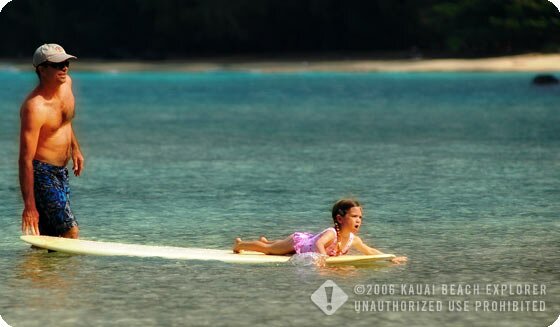
Surfing is all about having fun riding waves. Before getting started you should be able to swim and feel comfortable in the water. If you have this down, with the right location, good equipment, an understanding of the rules of the water and inherent dangers involved in surfing, you'll be up and riding waves in no time!
Let's Get Started!
- Take a surf lesson - A lesson will get you riding waves faster and safer than going out on your own. If you don't want to shell out the bucks for a lesson or are too cool for one, definitely keep reading...
- Wave knowledge is crucial to surfing - You can't catch what you don't understand. A boogie board and fins is a great way to learn how to recognize when a wave is coming, catch a wave, and get back out. Riding waves is a thrill even on your belly. You will catch more waves and have more fun on a boogie board while you are still figuring out the motion of the ocean. Remember to never paddle out into something you couldn't handle without your fins!
- Watch other surfers to help your own skills - Even expert surfers watch surf videos and other experts to improve their surfing. Just remember not to get in their way. The most dangerous thing about surfing is other surfers (see dangers for more).
- Learning to surf is a lesson in humility - Don't expect to be good in a day, a week, or even a year. It takes years of dedication to master the sport - just when you think you are there, you find yourself gasping for air and coughing up salt water after getting rag dolled.
Choosing A Location
Where you paddle out can make or break your surf session. Also, a beach that was great for surfing one day may not necessarily be great for surfing the next – depending on the tide and current ocean conditions. Having said that, here's what to look for in a beginning surf location:
- Small and calm waves - You obviously don't want large rough waves, leave that to the experts.
- Waves breaking on a sand bottom - Hitting a sandy bottom is softer than hitting reef!
- Light or offshore winds (see surf terms) - Onshore winds create rough conditions.
- Uncrowded spots - You don't want to hit anyone and you don't want someone hitting you!
Check out our recommended beaches for learning to surf »
Equipment
Surfboards come in all shapes and sizes. Picking the right board for your skill level is crucial to catching waves and standing up. A surfboard longer than eight feet with a wide, rounded nose is a good board to begin. A soft foam board (used for surf lessons) is even better because it hurts less if it whacks you. Wearing a leash is a good idea so your board stays close by and doesn't go hurling into other people.
Rules of the Water (How Not to be a Kook)
Here are some general rules to remember while out in the water. They are the unspoken rules of surfing that apply everywhere in the world.
- If someone is up and riding toward you, do not drop in (see surf terms) on them. Dropping in on other surfers could get you pounded by a local.
- The surfer closest to the peak has priority to take off
- Don't sit and gawk at a surfer riding toward you, move out of the way
- Be courteous, one kook in the water can ruin it for everyone
- Don't paddle out to waves beyond your surfing capabilities, you put both yourself and other surfers in danger
Dangers
Surfing comes with many inherent dangers. Here are some of them.
- Other Surfers - boards, fins, and people get tangled up when surfers run into each other. Most surfing injuries happen because of these collisions.
- Ocean - Always use caution. It is a powerful, constantly changing, unpredictable animal. If in doubt, don't go out.
- Your Board - try to fall away from your board as the board itself and the fins can cause injury. When renting a board, you may want to look for a soft top surfboard.
- Jellyfish - stinging jellyfish (called Portuguese Man of War or pochos) can be blown into the surf zone when the wind is blowing onshore. They have a blue air sac that floats on top of the water and a stinging tentacle that drags below. They are most likely to be found on east shore beaches and can be spotted on the beach in the high tide line.
- Sharks - we all know they are out there. Avoid surfing in murky water where you can be easily mistaken for a tasty shark snack.
Before You Paddle Out
Alright, so now you're ready to hit the water, but before you paddle out, take the time to observe the ocean conditions. Waves come in sets and there can be up to 20 minutes between sets. Watch long enough to see at least one set so you don't end up in waves that are too big for you. And if you haven't already, now would be a good time to review the beach safety tips.
What are they talking about? Surf Terms »
Recommended Beaches For Learning To Surf
The following beaches are not great for surfing every day. Where and when you surf should always depend on current ocean conditions. When in doubt - don't go out! Always ask a lifeguard or local if you have any concerns.
- Hanalei Bay - In the summer time, Hanalei's shallow, sandy bottom, gentle swells and pristine waters make for perfect conditions for the beginning surfer.
- Kealia - Mostly sandy breaks and almost year round surf, make Kealia a great place to get wet with a board. Beware of underwater rocks at both ends of the beach.
- Wailua - The extended shallow sand bar where the Wailua river meets the ocean can make for great knee high waves in waist deep water.
- Kalapaki - The middle of the bay at Kalapaki serves up gentle rolling waves, perfect for beginning surfers.
Beach Safety
- Beach Safety Tips
- Lifeguard's Ocean Safety Video
- Changing Ocean Conditions
- Rip Currents
- Seasonal Surf Trends
Beach Activities
Preservation
Want more? View all Hawaii guides »
Check out: Our Guidebook »
Your Questions Answered!
The Explorer's Guide to Kauai answers all the frequently asked questions from the discussions on this website, including the questions you didn't know to ask. Plus, there's detailed Kauai vacation maps and neighborhood info...Show me!
Let's Discuss (153 comments)
leave a comment
Jun 29, 2007 2:01PM
I would strongly argue against Kealia as a..
Kauai Explorer Staff
Jun 29, 2007 8:18PM
Chuck had a really good reply but our admin application cut off most of his message!
Anyway Chuck's point was that Kealia is ONSHORE most of the time (trade winds). This creates choppy and persistent waves VS the clean surfing conditions that OFFSHORE winds generate. Beginning surfing is tricky and if you just want to get the feeling of riding waves on a boogie board in front of the lifeguard station - 9 out of 10 days in the year - then Kealia is a good call.
The new facilities and bike path are a wonderful addition to this area.
Chuck if you could resubmit your post it would be appreciated.
Sep 24, 2007 4:26PM
awesome site! I landed a job on Kauai for the winter and want to do a lot of surfing. I have been out on longboards a few times. Anyway, should I try to pick up a board on the mainland, or can I get one on Kauai? (I'm guessing that the answer is yes, but as I've never been to Hawaii, I guess I better be sure). And what about the appropriate neoprene? What do you all recommend for winter, and can I get that on Kauai as well? Thanks!!!
Kauai Explorer Staff
Sep 24, 2007 8:35PM
Ted - all the surf gear you need is right here on Kauai. Hanalei Surf Company holds a swap meet the first Saturday of every month.
Oct 09, 2007 1:17PM
My husband, granddaughter and myself ( ages 58, 61 and 13 )are coming to Kauai the second week in April/08. We want a great beach to boogieboard ( good sized waves for heavier people - ha ha (1501bs).We will get a cab from the airport to a resort, so a place not too far from the airport would be best ( cheapest ) rather than having to go to Po'pu Beach. Do you have any suggestions for a resort/beach to fit this criteria? Thank you so much. Patt
Kauai Explorer Staff
Oct 10, 2007 7:12AM
Patt - Hanalei Bay or Kealia are good choices for boogie boarding because both have sand bottom and lifeguards. Look for resorts in proximity - but without a car you may have to do some walking or take the County bus.
Oct 25, 2007 5:39AM
I´m going to Kauai this Season and would like some tips about the surf arround.I surf since i was a Little boy (I´m 26 now), so how are the surf arround there? Does Hanalei breaks very Often?Can you guys tell me aa little bit more about it?
I´ll be in Princeville, so there are some good spots arround there?!!?
Thank for the help!! Vitor
Kauai Explorer Staff
Oct 25, 2007 6:29AM
From October through May you will find some very good waves on the North Shore - including Hanalei. My suggestion is to explore the various breaks when you arrive (the North Shore of Kauai is not a very large area).
Nov 04, 2007 4:18PM
My boyfriend and my four year old daughter are coming to Hawaii in December. I have surfed (mostly in California, Monterey area) for years, but my daughter and boyfriend have never been. She'll be five by the time we go and is a very smart kid so I know she'll catch on. Do you have instructors that will teach a child that young?
Kauai Explorer Staff
Nov 04, 2007 7:29PM
Ashli - go check out Hanalei Surf Company.
Nov 24, 2007 11:33AM
Great site! I will be coming to Kauai Dec. 5 for 3 months and am planning on camping it at county and state parks. Would you still suggest the north shore for a complete novice? I'm a whitewater kayaker/rafter and have surfed kayaks in waves in the Outer Banks, NC. Will be my first time on a board. Any suggestions on fave campgrounds, beginner beaches, and hikes? thanks a toN!
Kauai Explorer Staff
Nov 25, 2007 7:24AM
Hello Tashia - Hanalei Bay is a good place to learn because of the sand bottom. Tune into changing conditions and observe areas on the bay where other beginners are surfing. Na Pali and Kokee are great hiking / camping. Most of the other info you are seeking is already on the site. Aloha.
Elizabeth
Nov 27, 2007 2:28PM
We will be visiting Kaui Dec 2008 and staying at the Marriott's Waiohai Beach Club..It is located on Poipu Road, Koloa-Kauai. My son likes to surf and has been surfing moderately for a couple years. Are the beaches near there good for surfing that time of year? He is 14 and could probably use some lessons to orient him to the surfing conditions.
What other water sports, etc. are available there?
Kauai Explorer Staff
Nov 28, 2007 9:22PM
Hello Elizibeth - Poipu is on the South shore of Kauai. During winter months the predominant pattern is one where storms in the North Pacific create surf for North and West shores of all Hawaiian islands. Do not expect much surf in December on the South shore. On the other hand the diving, swimming, and snorkeling will probably be great. If you do want to find surf in Winter then you can take the 1 hour drive to the North shore.
Dec 13, 2007 11:38PM
Aloha! My mom, brother and I will be in Kauai at the end of Jan 08...can't wait! My brother surfs regularly in Cali and is an advanced surfer. I've been reading about the waves on the North shore in Jan. Should I be concerned about the "Gigantic" waves up north in Jan? How well do you need to surf in order to surf up there? Mahalo!!
Kauai Explorer Staff
Dec 14, 2007 7:07AM
Holly - the surf CAN be giant in January but it can also be small or medium. Usually you can find calmer areas that are matched to your ability. At Hanalei Bay, for example, the closer you go towards the pier, the smaller the surf because it is more protected. The important thing is to know your ability, assess the conditions, look at what other people are doing, ask locals and lifeguards and UNDERSTAND our posted safety concepts. Aloha!
Dec 27, 2007 12:57PM
Hi, I am headed to Hanalei Dolphin restaurant/accomidations for the first two weeks in January. I hope to do lots of Kitesurfing. I would love any advice. I understand the waves can be big or medium this time of year. Do you see people kitesurfing with much consistancy. I heard Anini beach is good as well. Thank you for any advice. I will also be around the airport the first four days of Jan. Any kiteboarding done in this area in Jan. Thanks so much.
Joe
Quynh
Jan 16, 2008 2:51PM
Hi, I will be in Kauai during in March, and I would like to take some photos of adv. or expert surfers. Which beach would you recommended for this time of the year. Thanks.
Kauai Explorer Staff
Jan 16, 2008 5:32PM
Quynh - unusual question. Expert surfers go where the surf is currently happening. Just know that conditions always change. The North and West shores are known for epic surf. If you really want to see expert surfers in action buy a surf mag or movie. Seriously! W
Jan 27, 2008 8:12PM
Just wanted to add some advice from a 20+ yr vet of drop knee bodyboarding in the Hawaiian islands (I also surf, bomb hills, & dirtboard). These tips could save your life:
1) WHEN IN DOUBT, DON\'T GO OUT! If the waves look too big for you don\'t go out! If no one\'s out at spot that has waves, there could be a good reason! There might be a reef lurking 1 ft. beneath the surface. There could be a dangerous current. Better, more suitable waves can be found elsewhere. Know your limits of your skill set. If, when you get to a beach, you\'re facing the biggest waves you\'ve ever faced in your life know that testing your limits in Hawaii can lead to permanent injury or death. Not only are those waves going to be more powerful then waves found elsewhere except for Teahupoo, currents are extremely powerful during high surf & can pull a person out to sea where they are one small speck in a gigantic ocean for searchers looking for a person. Large waves have the power to snap bones on direct impact, drive one hard enough into a reef or sand bottom to cause carwreck-like injuries, or even drive one deep into undersea caverns and ledges where panic can lead to drowning. It\'s a sad fact that this message isn\'t included in every tourist packet as they come in on planes. We lose tourists and locals every year to the awesome power of the ironically named Pacific Ocean. Pipeline on Oahu alone averages about one death a year.
2) IF YOU\'RE CAUGHT IN A CURRENT DON\'T PANIC! I can\'t emphasize this enough! People that find themselves being pulled out to sea tend to panic & expend all their energy fighting a river of current going out to sea! This river of current is going to be powerful but only so wide, your goal is to paddle PARALLEL to shore until you\'re free of the outgoing current. THEN start swimming (or paddling if you\'re on a board) back to shore. Pace yourself, you might have a long paddle ahead of you. Try to wave for help from shore, use your swimsuit or top as a flag if you have to. Tread water or back stroke if you need to. If you\'re in a situation where it\'s impossible to get back to shore, try to tread water & stay afloat as long as possible. Searchers will attempt to search areas where they estimate objects would be swept to during the course of time.
3) RESPECT THE LOCALS! Locals have to deal with having their surf spots continually invaded by surfers of usually begginer level every year. It\'s taught me patience. :) Look I know it\'s exciting that you\'re swimming or surfing in Hawaii but watch out for surfers already on a wave or paddling for a wave when they\'re deeper then you. A person is \"deeper\" if they\'re the one that\'s closest to where the wave is peaking. That person has a right to that wave. DON\'T DROP IN ON THEM! Not only could you ruin a perfect wave for them (& believe me, perfect waves are rarer then the surf media makes it out to be), you could cause injury to you or the rider on impact. Some locals have resorted to bodily harm in some instances. I know a guy that went to jail for that. So just wait your turn, a wave will come. If you\'re the guy in position & you have the requisite skill level, then more often then not, you can get a wave to yourself! Oh, & while paddling or swimming pay attention to what\'s going on all around you! I can\'t tell you how many times I\'ve almost accidently taken a tourist\'s head off but was able to dodge at the last minute no thanks to said clueless tourist. Hey, these boards can hurt if they hit you! A surfer is mostly focusing on where the wave will be breaking and sometimes not what\'s directly in front of them. Unbeknownst to the media, local surfers save lives all the time but it never makes the news. So respect the locals because they might be saving you one day. One time when I was a teenager a father on vacation offered me & my friend $20 for rescuing his two daughters being pulled out to see at Kahaluu on the Big Isle. LOL, like you could put a price tag on that. Course I didn\'t take the money.
Feb 05, 2008 8:41PM
I have a question. My family and I will be at the Marriot Waiohai from 2/15-2/20. Where is the closest location to learn to surf? Where is the best location to learn to surf, at this time of year?
I've been a 'water' person almost all my life: competitive swimmer, city lifeguard for 4-years, bodysurfing and outrigger canoeing. My oldest son, he's 11, and I would like to take a lesson together.
Mahalo.
Kauai Explorer Staff
Feb 06, 2008 6:59PM
Aloha Marlayna. On the South side of the island in February, you may find lake-like surf conditions. Of course, conditions vary and you'll be very close to Poipu Beach Park, where there is a lifeguard and a surf shop next to the restaurant there. Talk to the lifeguards about ocean conditions and check in at the surf shop to get more info about lessons and the best spot to go out. Enjoy! J
Feb 09, 2008 6:57PM
My family and I are going to be in Kauai towards the end of July this coming summer. I was wondering what kind of surf I should be able to expect on this island during this time of year. I am an experience surfer from California, but never surfed in the Hawaiian islands. What are some surf spots that I should seek out and are there any spots that I should avoid (localism)?
Kauai Explorer Staff
Feb 11, 2008 8:31PM
Aloha Shannon. Surf is generally flat on the North Shore in the summer with bigger swells on the South and West side. Ask lifeguards or check out or site's Daily Ocean Report for conditions when you're here. As a surfer yourself, you probably understand that we aren't going to recommend specific surf spots. J
Feb 21, 2008 9:03PM
I will be staying at Pono/Kai in early July. Will there be any waves there?
Also, I plan to travel with my surfboard (6\'4 Fish). What is the best way to transport it to the island, or would it be easier to rent a board for the entire week?
Kauai Explorer Staff
Feb 21, 2008 9:14PM
Aloha Derrick,
Pono Kai is in Kapaa on the East side. Generally the summer months see the biggest waves on the South and West shores, which would be within driving distance (30 min - 1.5 hours). The East side can still see a swell in the summer. There is no real way to predict. As for transporting a board, the standard travel board bag is recommended. You'll check it with your luggage. Whether or not you rent is really a matter of preference. I'm not sure if there are companies that rent anything besides the foam longboards. Have a great trip. J
Apr 08, 2008 11:13PM
Honeymoon on South Shore first week of August. Are we going to find anything? Waist to chest? Little shoulder? Would be music to our ears. We need more than just a fruity beverage at a resort. Or do we head to Tamarindo? Thanks for your insight!
Kauai Explorer Staff
Apr 09, 2008 6:47PM
Aloha. In August surf is typically medium to large on the South and West shores. Check out this page on our site for more info: https://kauaiexplorer.com/guides/beach/seasonal_surf_trends.php.
Can't imagine you'd regret coming to Kauai. Just stay off the North shore when looking for waves that time of year. J
Ellen
Jun 17, 2008 10:05PM
My 24 year old son and two of his friends want to move to Kauai in October and rent a year round house. They are experienced surfers. What beaches or neighborhoods would you recommend?
Kauai Explorer Staff
Jun 18, 2008 7:51AM
Hi Ellen. Surf for experienced surfers only is happening on the North Shore in the winter. This area of the island is also the most expensive, rent-wise. A good central location on Kauai is Kapaa and the surrounding neighborhoods. Aloha. J
Jun 23, 2008 3:27AM
Great website. We\\\'re planning a visit in Dec/Jan with our 4 sons (ages 10-17). They love to boogie board, but I\\\'m worried about the winter surf. Is it usually safe on the east side--we\\\'re looking at condos around kapaa. also, is rain an issue? thanks!
Kauai Explorer Staff
Jun 23, 2008 6:57AM
Hi Carol. Kapaa is centrally located, so even if surf is too large on the East side, a relatively short drive to the South shore may very well have smaller conditions in the winter. Check the ocean report and talk w/ lifeguards on the specific days you are here. Rain is a part of life on Kauai, especially in the winter, but the South and West shores can often be sunnier if the East and North shores are overcast. Enjoy. J
Jul 07, 2008 3:07PM
Hi,
Any chance of surf at shipwreck's in November? Family trip not a surf trip so will be at the Hyatt the whole time. Don't want to drop nearly $300 to get a board back and forth if there will be not even a chance of surf.
thanks for your time and effort,
Kauai Explorer Staff
Jul 07, 2008 8:38PM
Aloha. It's hard to predict, but the South shore generally has small conditions in the winter. When Shipwrecks does have surf, it is for experienced surfers and body boarders. You may want to consider renting a surf board once you're here - conditions permitting. You could check out the Nukumoi Surf shop in Poipu to find out what they offer. J
Jul 15, 2008 9:49PM
I am flying to Kauai for the very first time for a wedding, and I would like to know if people still surf this time of year on the east shore where the Marriott is located. I would like to know if it is worth to bring my board on the plane all the way from Cali.
Jul 18, 2008 2:38AM
Hi, I'm staying at the ResortQuest Kauai Beach at Makaiwa next week and I really want to learn how to surf. Do you know of any companies on the East side that could help with this? What swimming/surfing beach is closest to Kapaa?
Kauai Explorer Staff
Jul 21, 2008 8:14PM
Aloha Alanna. We don't recommend any businesses on the forum, but an internet search for surf lessons kapaa should steer you in the right direction. Kalapaki Bay, just outside of Lihue can be a good beginners spot (conditions permitting) and they have surf lessons there, as well. Enjoy! J
Jul 30, 2008 8:15PM
Good Afternoon...
Will be at Poipu Beach 10/19-10/23
Is the surf still ok size? I am a good surfer but dont want to be scared of the size on the North Shore
Thanks,Doug
Kauai Explorer Staff
Jul 31, 2008 8:11PM
Hi Douglas. One can only go on typical patterns, so check in with our daily ocean report and lifeguards when you're here. October usually sees the surf picking up on the North shore and getting smaller on the South side. Winter is the peak time for big waves on the North shore, so you'll be here at a segue time. See our Seasonal Surf trends chart here:
https://kauaiexplorer.com/guides/beach/seasonal_surf_trends.php
Enjoy! J
Aug 05, 2008 11:13PM
My bf and I will be in Kauai this Sept 1-6, and hoping to surf some beginner/intermediate breaks. Any recommendation on where we should stay (e.g. Poipu vs. Hanalei bay) to be closest to a variety of surfable breaks?
Kauai Explorer Staff
Aug 06, 2008 7:12PM
Aloha Joyce. September still sees pretty small surf on the North Shore and Hanalei Bay can look like a lake, depending. It can be hard to predict. If it's small on the North shore then the South side (Poipu area) may be big. Perhaps a mid-point like the Kapaa area would keep options open to watch the ocean report and go to the best break for your ability. You may want to check out Kalapaki Bay, which has a spot that offers lessons and can often serve different levels of ability. Enjoy! J
Aug 10, 2008 9:01PM
Hi,
Great site. My girlfriend and I took a surf lesson in hanalei the other day and have spent the last few days on our foam boards over there. Although we are having fun, the waves are small to non-existant and we want to start trying some bigger waves. The folks at the surf school said there\'s nowhere else for beginners but Im finding that difficult to beleive. So I\'m wondering if there\'s a beach with small waves that we can try out where we will still feel safe and not get in others\' way.
Thanks!
Kauai Explorer Staff
Aug 11, 2008 8:49PM
Aloha Uotam. It's true that Hanalei can be pretty flat in the summer. Today's ocean report shows 0-1ft there. Poipu is showing 2-4, though that size can be dangerous for beginners and is not recommended without an instructor's presence. You could tune in with a South shore surf school or call over at the Kalapaki Bay area and see if their activity desk feels today's conditions are good for learning. Hope this helps. J
Robert Pilger
Sep 03, 2008 9:28PM
I plan to visit Kauai in December. Love to body surf (very experienced) and boogie board (moderate experience) and heard Brennecke Beach is good, however cannot locate it on maps. Stayed at Poipu in the 1970's but do not remember the beach there although I recall body surfing somewhere near there. Any other suggestions of good body surfing beachs that time of year.
Kauai Explorer Staff
Sep 04, 2008 6:33PM
Hi Robert - Brenneke's got really messed up by hurricane Iwa and there is barely any of that nice sand you experienced in the 70's. If you are truly experienced you can try Shipwrecks, just watch out for the random sharp limestone rocks and coral. W
Nov 30, 2008 9:06PM
Where I can I rent a good longboard on Kauai? I am staying near Tunnels Beach
Kauai Explorer Staff
Dec 02, 2008 5:21PM
Hi Dan - Hanalei Surf Company rents all kinds of boards. You'll want a shortboard for the surf in Haena, but Hanalei has good longboarding. W
Dec 29, 2008 7:46AM
I want to go to see the swap meet for surf boards in Hanalei. Which day is in January?
Kauai Explorer Staff
Dec 29, 2008 10:30PM
Hi Sumi - the SurfCo swap meet happens on the first Saturday of every month on the lawn in front of the SurfCo store. W
Jan 12, 2009 6:59AM
looking for hidden beach shack. any suggestion on where to look?
Kauai Explorer Staff
Jan 13, 2009 5:57PM
Rich - I don't understand what you mean by "hidden beach shack." Anything on the beach is not generally a shack because the property is so expensive. W
Jan 15, 2009 1:48AM
I\'ll be in Kauai during the end of Feb and beginning of March... I\'m an intermediate surfer looking for 2-4 ft waves. What beaches would you expect for that time of the year?
Jan 17, 2009 9:26PM
Hello
I\'m looking for a nice place to learn surfing for me and my 12 yo daughter in July. We\'re beginners and have had a couple of lessons in Oregon.
Is there any kind of surf camp in Kauai?
Thanjs for any useful information
Kauai Explorer Staff
Jan 21, 2009 6:43PM
Hi Sarah - you will probably find some nice surf in Hanalei that time of year. Check with the Ocean Report and we'll let you know the conditions day-by-day. W
Kauai Explorer Staff
Jan 22, 2009 1:15AM
Hi Carole - there are a number of surf schools on Kauai but I am not aware of any surf camps. Check out the Hanalei Surf Company in Hanalei town. Hanalei Bay is all sand bottom and a great place to learn. W
Jan 28, 2009 3:22AM
Love the website. I own a <a href="http://www.alohabeachcamp.com/billabongsurfcamp.html">Billabong surf camp</a> for kids in Los Angeles called Aloha Beach Camp. We take the kids on an annual overnight surf trip each year in Hawaii, and we have historically always gone to Oahu or Maui but this looks so awesome we may try Kauai soon.
Kauai Explorer Staff
Jan 29, 2009 4:22PM
Hi Eric - as you probably know, Kauai has spawned some incredible surfers. YMCA Camp Naue would be a great place to host a surf camp. W
Feb 02, 2009 4:31AM
Hi
Wondering where the best surf is for an intermediate surfer the first week in May 09. Also where is a good place for an intermediate lesson during that time.
Thanks
Kauai Explorer Staff
Feb 02, 2009 4:49PM
Hi Rob - there is usually still some surf on the North Shore in May so I would recommend Hanalei Bay. W
Feb 15, 2009 10:38PM
Aloha,
What a great website! My husband and I are heading out for a week on Kauai starting on 2/22/2009. I\\\'m beginner (surfed once in Maui) and he is intermediate level. Any suggestions on where to go? It looks the like North and East shores might be too big. Thanks for your help.
~Amy
Kauai Explorer Staff
Feb 17, 2009 4:26PM
Amy - you can usually find some smaller waves in Hanalei Bay by going closer to the pier, which is more protected from direct surf. W
Mar 06, 2009 3:47AM
Hi,
Going to be at the Grand Hyatt on the South Shore last week of April. I'm a beginner any chance of favorable conditions?
Thanks,
J
Kauai Explorer Staff
Mar 08, 2009 3:32AM
Hi Jarod - South shores will probably be small in April but you might get lucky. On an island can usually travel somewhere in search of surf. It's rarely totally flat. W
Mar 14, 2009 2:44AM
Kealia is NOT a beginner's spot and should be taken off of this list. It is one of the most dangerous beaches on the island of Kauai for rip currents and pounding hollow waves. I have paddled several tourists back to shore that were in over their heads. A beginner could be seriously injured or DIE at Kealia. -- BTW Been surfing on Kauai all my life.
TOC
Apr 05, 2009 10:14PM
Returning to blissful Kauai for the 3rd time in a couple of weeks (april 16-23). Although I know my way around the island, I've never been there at this time of year. and I finally want to get out for a beginner surf lesson. At this time of year what beach(es) should I be looking at? Can you recommend a possible teacher/school at a reasonable price?
thankyou.
Kauai Explorer Staff
Apr 07, 2009 8:51PM
Hi TOC - April usually has fun small surf. You should check out Hanalei Surf Company and get some waves at the Bay. W
Apr 20, 2009 8:32PM
Hey, I am an experienced surfer from Santa Cruz Ca. I will be honeymooning in Kauai in mid Sept. The trip is not primarily a surf trip b/c my bride to be doesn't surf. We are considering staying in Hanalei or Poipu, or a week @ both (we are staying 2 weeks). Will Hanalei have any surf this time of year? What do you think is the best area in sept to honeymoon (spend quality time w/ the new bride not surfing) and also be able to get is some good sessions?
Thanks-J
Kauai Explorer Staff
Apr 20, 2009 11:09PM
Hi J - September is a transition month so you could stay South and have to drive for an early-season North shore swell (or visa-versa). Since the North shore has more and larger beaches, I would probably recommend staying there so you and your new wife can explore some nice beaches. Both shores are amazing, just different. W
May 12, 2009 4:45AM
hey. i\'ve been on the big island for a month or so and am looking to settle down in kauai for the surf. but also need a job for AT LEAST the summer along with my girlfriend.
so i guess my question would be where would be the best surf, easiest possibilities of jobs and housing on kauai.
mahalo
Kauai Explorer Staff
May 12, 2009 5:16PM
Hi Kyle - if you want surf in the Summer you'll have to find work and a place to stay on the South shore. W
Jul 18, 2009 5:37AM
My wife and I are both intermediate longboarders from San Diego looking for a place to stay Sept 5-12 for our first time in Kauai. What is your recommendation for a hotel or condo rental? Also where do you recommend we surf at? What size waves are there usually in early September?
Thanks!
Kauai Explorer Staff
Jul 18, 2009 5:46PM
Hi Sean - there usually is not much North shore surf in early Sept. but you could get lucky. Hanalei Bay is a great place to stay and surf but since Sept. is a transition month you may have to drive South to find some surf. We don't recommend rentals at this time. W
Jul 22, 2009 6:57AM
Im an adventurous chick from KY. A beginner with no fear when it cums 2 learning how 2 surf. i will be in kauai the last week of august and am looking 4 some cool waves 2 ride as well as yummy places 2 grub and any drum circles on the beach i could sit in on. lemme kno -B
Jul 24, 2009 12:15AM
Thank you for this web site. Here is my question: I\'m pretty much a kook who got bitten by the surf bug fairly recently (in my mid-thirties). I can usually get up on a longboard in 4-5 ft. surf (measured by CA standards, not HI - I have heard you guys use a different measure front of the wave v.s. back), but that's about it.
I have been invited to give a talk at a professional conference in Kauai (Poipu) in early February. I\'d like to use the opportunity to improve my surfing as well. I\'ll be at the south shore when it\'ll be most likely be flat as a pancake, but I was wondering what my best options are. Rent a longboard for a week, and just go up north when I can sneak away, or check out some of the beaches on the east side, or... pleas fill in the blanks here. Going on my own, I\'m of course also a bit concerned about being respectful to to locals. I perfectly understand their plight of being overrun by tourist kooks like me (I used to be on the opposite end in a different sport ? mountain climbing), but I also feel the need to just get out there and get the experience of waves (perhaps a bit bigger than I bargained for) myself.
Any suggestions are be much appreciated.
Chris
Jul 28, 2009 8:51PM
coming out in mid-August, is 6 too young to try surfing, good swimmer - how\'s the kayaking in the rivers/bay - can you suggest best snorkel spots for 6 year old? staying in North Shore - thanks
Kauai Explorer Staff
Aug 02, 2009 6:38PM
Hi Becky - you'll probably find some South or East shore surf in August. Just be careful with the no fear part because even us lifelong surfers fear getting pounded and held down. Don't know about drums but plenty good places to eat. W
Kauai Explorer Staff
Aug 02, 2009 6:51PM
Hey Chris - sounds like you have the bug and the right attitude as well. You'll definitely want to check out Hanalei point and sandbars (depending on the wind). East shore might be good if we get light or west winds. I think you'll be better off renting boards so you can tune the selection to the type of waves. Check out Hanalei Surf Co. Have fun and be safe.
Aug 21, 2009 2:15AM
hey! my girlfriends and are coming to kauai next week and are staying in princeville.
i recently took up surfing this year, but am no pro yet. What is a good beach to teach my friends at? And a good beach for more experienced surfers?
ps where can i find good kayaking?
thanks!
Aug 21, 2009 2:17AM
ps where is a good place to rent boards for a good price?
Kauai Explorer Staff
Aug 22, 2009 6:42PM
Hi Chelsea - you can rent boards at surf shops around Kauai. Nukamoi, Tamba, Hanalei Surf, Kai Kane, Hanalei Pier.
Kauai Explorer Staff
Aug 22, 2009 6:44PM
Hi Chelsea - Hanalei is a great spot to learn - the waves are small during the summer. Other spots include Kealia, Kalapaki and Poipu (but Poipu has more reef areas). Kayaking is fun on the Na Pali, Hanalei and Wailua.
Sep 08, 2009 11:22PM
Hi,
I\'ll be staying at the Marriott in Lihue for 4 days in late September 09 and then up in Princeville for 3 days. I\'m a good surfer and would like to find some solid, fun waves. being that its sept, it could be S or NW swells. What are the best S swell spots for intermediate/advanced surfers? Anything in/near Lihue or are the better spots down towards Poipu? NW swell I assume Hanalei is best? any other websites that have lots of info you can point me to would be great!
Kauai Explorer Staff
Sep 12, 2009 5:30PM
HI Keith - Poipu has a number of spots for South swells and yes, Hanalei is a good place to start if we get NW.
Oct 02, 2009 6:04AM
hi...I\'m going to be staying in Princeville Oct 3-9 and was wondering if there is a way to rent a SUP and take it down some of the rivers. I\'ve seen a bunch of kayak outfitters offering tours and SUP lessons, but can I rent a SUP and take it down the river myself with my travel companions? Also, are there surf cams or daily surf reports somewhere online? I subscribe to Surfline, but that doesn\'t seem to be much help for Kauai spots.
Mahalo!
Kauai Explorer Staff
Oct 02, 2009 6:02PM
Hi Delza - you can rent SUP boards in Hanalei at the river-mouth / pier and at Hanalei Surf Co.
Nov 24, 2009 10:45PM
We have taken a family trip to Poipu in the winter and the conditions were perfect. We are thinking about visiting Poipu this summer and understand that the waves are larger in the summer than the winter. We have a 2 & 5 year old - are there kid friendly beaches in the south in the summer? Is one month better than another.....
Kauai Explorer Staff
Nov 26, 2009 4:50PM
South will likely have surf in Summer and North will be calmer. Check the seasonal surf trends page for general patterns.
Dec 03, 2009 6:16PM
My husband and I are going to Kauai for our honeymoon in February. We definitely want to try surfing, snorkeling and swimming in the ocean, but we're not sure which area to make our home base. The North Shore looks beautiful, but I'm worried it will be too dangerous to get in the water there in Feb. Are there safer places on the North Shore to swim and try surfing? What other areas should we look into?
thanks!
Dec 27, 2009 8:35PM
Hi!
we are thinking of honeymooning in Kauai in the first two weeks of August. We'd love to do a surf course but are total beginners and don't know where to start looking. Any tips? Are there nice places to stay nearby? Thanks!
Kauai Explorer Staff
Dec 29, 2009 1:00AM
Hi Rosie - Hanalei is best to learn surfing but August will be flat. You can try Kealia or Kalapaki but be sure to check with locals and lifeguards.
Jan 03, 2010 3:32PM
visiting in late june 2010. what is the best region of the island to be near beginning surf spots? what is percentage of days that will have beginning surf conditions?
great site!!!
Kathy Ballou
Jan 15, 2010 10:04PM
visiting in mid/late june 2010. what is the best region of the island to be near beginning surf spots? would like to be able to rent boards as well as walk to a beach.
Craig
Mar 11, 2010 1:55PM
Hi,
we are coming over in about 10 days for 10 days, I am in the process of teaching my son to surf, we will be bringing our boards and may look you up, it would probally be worth the in vestment to have you help is the first day, I surfed every day from about 9 yrs old to maybe 30, have not been on a board since, I am now 48, I have paddled out twice in the last few weeks with my son and he is standing up in the white water, and I can still do it, I am a Kook, but old man now, so you may hear from us, we arrive in Poipu on the 25 of this month !
Kauai Explorer Staff
Mar 11, 2010 5:44PM
You're going to have run Craig. The Hanalei sandbars are good right now.
Craig
Mar 11, 2010 11:08PM
Sweet, we are so ready for a relaxing break, and to see that smile on my sons face when he stood up a few weeks ago , was very worth being cold :) but in your back yard the water is warmer ! See you soon !
Craig
Mar 17, 2010 4:47AM
Where is the best beach to learn how to snorkel and surf the first week of May?
Apr 22, 2010 2:26AM
I have read there is some windsurfing on Kauai, near Tunnels. I have been having a hard time trying to find anything on the internet or even a place that will rent equipment. Do you know if you can windsurf somewhere on the island? My husband would like to go windsurfing at least once while visiting the second week of May.
Kauai Explorer Staff
Apr 22, 2010 4:52PM
Julie - there are some rental / lesson companies at Anini. Nobody rents in Haena.
May 04, 2010 3:56AM
My friend is coming over and wants to take surf lessons but she told me she doesn't know how to swim. What do you recommend I do?
Kauai Explorer Staff
May 04, 2010 4:55PM
Jaz - she should learn how to swim first. You can't surf with a lifejacket. Kinda like if you're doing a triathlon you should learn how to ride a bike.
May 12, 2010 9:06PM
Some friends and I are staying in Kapaa at the beginning of June. We'd like to take a surf lesson in the area but are not sure we have time to drive up to Hanalei Bay the day we have set aside. Can you recommend a surf company with lessons on the East/South side? We've both surfed a few times before but are still beginners. Thanks!
Jun 18, 2010 5:03PM
We are coming to the Kauai Beach Resort around the 10th of September. I'm an intermediate level surfer from San Diego. I checked out your graph for surf and it looks like its medium to small on all sides in September. Seems like the east side (where the hotel is) is the worst side for surfing - Im guessing because of the wind. Will it be reasonable to drive from the hotel and find dome decent waves and a board to rent that time of year?
Kauai Explorer Staff
Jun 20, 2010 5:11PM
Yah Max - check the daily ocean report and you'll know whether to go North or South in Sept.
Josee Savard
Jun 23, 2010 8:11PM
hey guys, we're windsurfers adn we were thinking of coming in mid october, where is the best beach to windsurf, i'm intermediate (8 yrs of experoence) and my husband is advanced (15yrs of experience) i know you can't predict wind but is there a best season for wind, Appreciate you taking the time
Josee
Kauai Explorer Staff
Jun 24, 2010 10:30PM
Aloha Josee - October is typically one of the worst months for wind (I'm an avid kiteboarder). We get good waves and lots of glassy days in the fall. There are always exceptions.
Jul 18, 2010 5:14AM
Aloha,
my name is Matias Madero and Im 27 years old, born in the US and currently living in Argentina. I love surfing and work as a surf board "shaper"and its been a dream of mine to live in Hawaii!!
I have experience in (Agriculture & farm country!! I was raised on a ranch and enjoy all types work and love taking care of horses!!
As a surfer I really cant wait to get out of this urban and big city life. I have tones of energy and will work very hard for you!!
Im going to be living with my friend N
Aloha,
my name is Matias Madero and Im 27 years old, born in the US and currently living in Argentina. I love surfing and work as a surf board "shaper"and its been a dream of mine to live in Hawaii!!
I have experience in (Agriculture & farm country!! I was raised on a ranch and enjoy all types work and love taking care of horses!!
As a surfer I really cant wait to get out of this urban and big city life. I have tones of energy and will work very hard for you!!
Im going to be living with my friend Noah who already lives on the island of kauai and is going to help me get on my feet and established!
I will be in the Koloa area around August 20 2010 So please contact me if you need help or any work!!! You can also call Noah 5093893896 or email me back about any jobs available!!
Good vibes with much respect Matias.
noah who already lives on the island of kauai and is going to help me get on my feet and established!
I will be in the Koloa area around August 20 2010 So please contact me if you need help or any work!!! You can also call Noah 5093893896 or email me back about any jobs available!! At [email protected]
Good vibes with much respect Matias.
Sep 12, 2010 6:02AM
Aloha, I am a beginner swimmer and would like to learn to surf. We'll be there at the end of September. What beaches do you recommend I learn at during this time of year? Thanks!
Oct 19, 2010 12:53AM
Aloha,
My family and I are coming out in March. I grew up boogie boarding at Brenneke's, but would like to try surfing when we come visit in March. What's the best work out I can do between now and then to give myself the best chance of getting up on my feet? I am not very strong or flexible!
Mahalo,
Brooke
Kauai Explorer Staff
Oct 19, 2010 10:30PM
Hi Brooke - swim a bunch and skateboard or stand-up paddleboard. Have fun.
Dec 08, 2010 5:25AM
what surf spot's in kauai do you guys recommend for an intermediate surfer(I'm looking for good sized waves, maybe 5-8 feet,) and there is a nice hotel near for my family to stay at? Also, it's really expensive to bring my board from California, so is there place where i could rent a nice board near airport or hotel in kauai?? Thank you so much.
Jan 04, 2011 9:11PM
Getting up there in age but, encouraged by videos of dogs surfing, a college friend and I hope to get the thrill of catching a wave one more time. What is Kauai's January answer for"dog surf"? Waiohai, Lemon Drops, Hanalei by the pier?
Staying in Poipu. Thanks KE staff.
keopele mcbride
Jan 20, 2011 8:46PM
Try a lesson with Kauai's North Shore Surfing School.
Its easy and fun for the whole family when your woth Kauai's best instructors
Mar 03, 2011 2:04AM
My family and I are coming Kaua'i at the end of November and are looking at places to stay on the North Shore. It seems there is a lot of information about Hanalei to be found, but not as much about the Haena and Anini areas. We will have a mix of good surfers and novice surfers with us, as well as several children - the older ones will want to surf but it would also be nice to have a beach area where the younger ones could play without being taken out by the waves. Can you give me a sense of what the conditions might be like at Heana and Anini at that time of year? Is Hanalei the best bet to find a range of surfing conditions? How far is the drive between the three areas? And where are the surf shops?
Thankyou!
Mar 07, 2011 12:05AM
trying to locate the kids surf camp that starts in june near pine trees. any info? thanks, kevin
Mar 26, 2011 3:55AM
Aloha oukou
Any idea what's up at Brewer Surfboards, Sent numerous emails and called twice only to leave a message but no reply's?
Mahalo
Ed
Kauai Explorer Staff
Mar 26, 2011 5:31PM
No idea Eddie.
May 16, 2011 5:53PM
Where is better to spend the summer for surfing: Oahu or Kauai? idk how much time you guys have to answer this, but email if you have helpful suggestions.
Kauai Explorer Staff
May 17, 2011 7:58AM
Both have good surf. Oahu more spots and more people.
May 20, 2011 4:48PM
HOW MANY DROWNINGS LAST YEAR AND HOW MANY SO FAR THIS YEAR ON KAUAI
Jun 25, 2011 7:30AM
well im a begginer surfer and i would like two know how far i need to go out so i dont get hurt! thanks beka!
Jul 29, 2011 10:06PM
so me, my hubby and a couple of our friends are planning to take a trip to kauai around october hopefully. Some of us surf but i just started to learn where is a best place to keep practicing at?
Aug 23, 2011 3:43PM
I am visiting Kauai end of November for two weeks. My boyfriend and I want to surf both semi beginner.
Where should we go- I want sun and surf
Sep 20, 2011 9:20PM
i have been dreaming about going back to hawaii.i spent a couple of years on maui and loved it but had to leave to be with my dad before he passed.i always wanted to go to kauai because i heard how awesome it was.ive been working as a surf instructor here in san diego for 7 summers in a row.i love it so much and would like to teach surfing year round.do you think it would be difficult to find this type of work?i also wait tables so would hanalei be a good spot to search for employment?
Nov 07, 2011 8:37AM
Hi I am trying to plan my honeymoon for the beginning of May to Hawaii and have heard great things about Kauai. We are both advanced beginner surfers and feel comfortable on 2-4 foot waves. With that being said we want to be close to a beach we can surf at least once a day at, but also want to be able to explore the island. We heard there are great hiking trails with waterfalls and such - we are also hoping to find a hotel that can provide the setting one dreams of for a honeymoon. I know that is a lot to ask, but any suggestions would be greatly appreciated.
Nov 08, 2011 1:09PM
I learn in Poipu at the same stretch of beach that the Kauai Surf School uses. Super cool guys and they helped me get started with the Holoholo balance board. See the web link for information on how this balance board can help you work on real surf and board riding skills. Aloha
Dec 03, 2011 9:45AM
My family and I just took surf lessons in Poipu last week for the first time and we are hooked.
We are planning to spend 1-2 months this summer learning to surf as a family. kids are 12 and 10.
Where would you recommend surfing and what 2 months between June and august would be the best timing?
Kauai Explorer Staff
Dec 04, 2011 7:52AM
Tristam - in summer the surf will be more active on South shores but that is just a general trend. I would plan your trip and expect to be mobile in your quest to find the best surf.
Dec 06, 2011 2:31AM
Are there any issues with having a small camp fire on any of the beachs at night?
Kauai Explorer Staff
Dec 06, 2011 7:30AM
Hi Andre - many people have open fires on the beach. Legally you are supposed to be cooking something.
Jan 02, 2012 2:05PM
I am coming in March and staying in the Wailua area. I used to consider myself somewhat of a waterman but I only long board occasionally these days and to be quit frank its hard to maintain a waterman status living inland. Where should I rent real equipment and where should I expect to find some fun waves without getting in too many peoples way. Thanks mucho!
Jan 08, 2012 5:28PM
I will be on Kauai mid-February 2012 for 9 days and would like to boogie (sponge) and surf. Have 20 years experience boogie boarding in up to 6 ft+ surf in Carolinas and Florida (some storm surge). Have never surfed but really want to learn. Other than Hanalei Bay, where is there challenging boogie boarding? Who rents (or sells) used good boards?
Feb 13, 2012 8:04AM
I will be in Kauai March 13-22, would like to take surf lessons. How much does it cost?
Feb 24, 2012 11:04PM
Hi, I have an 18yr old son who is getting into surfing. He is studying civil engineering at Glasgow University, Scotland. He has long summer holidays from end May through to mid September and would like to visit Kuaui, get some work to keep him in cash, find a modest but comfortable place to stay, and be able to get his surfing going. I have spoken to Saa tamba about this and he undertook to talk to someone who had a hostel across the street from his surf shop but I have yet to hear back from Saa. Any help, ideas would be welcome.
Mar 02, 2012 2:24AM
Aloha again!How much is Hanalei Bay crowded for a beginner surfer?
Mahalo for all!
Barbara
Mar 05, 2012 1:00AM
Aloha! I m planning my holiday in Kauai for this July. My boyfriend and I would like surfing for our 1st time and we are thinking to go in Hanalei Bay.
I saw in one your graphic that the waves in July in the Hanalei Bay are really not much, almost nothing. Is it true or not?
If we ll stay in the north could we have surf lessons?
Thank you so much for your help, I need it so much because I organize alone my journey from Italy is not so easy! Mahalo! Barbara
Mar 05, 2012 1:17AM
Sorry, I ve read alone the messages of the others and I think that for my boyfriend and I is really better go to Poipu for ours first lessons of surf because in the north area is not sure to arrive to surf everyday!
Anyway we ll rent a car so we ll drive in the north area that I read it is more beautiful than Poipu.
For you is it right?
Mahalo! Barbara
Jun 14, 2012 5:28PM
Im an experienced surfer and will be in Kauai mid july. I know this isnt the best time for surf but what breaks offer the best conditions in the summer.. thanks
Jun 24, 2012 3:24PM
I am planning to head to the South, or West Shore of Kauai for my honeymoon in late July... I am looking to stay somewhere where the surf would be good for me and my fiance - we both longboard... Really looking for an area that is not built-up with large hotels.
Would love any suggestions!
Thanks!
Jul 19, 2012 5:02AM
I am planning a trip to Kauai next summer, most likely in June or July.
My 11 and 14 year old daughters are just getting into boogie boarding and would love to be able to do this every day. They are not highly experienced, but would like to be able to do it right at the hotel we stay at.
We can either stay up on Hanalei Bay up north, or in Poipu (sp?). I know form the surf conditions you helpfully linked, that the North seems very flat in summer. Would the surf in the south be too big for kids in the Summer? Would there still be decent waves up North for beginners, even if the experienced surfers would not bother that time of year?
Joel
Sep 30, 2012 8:06AM
Aloha,
What beaches do you recommend for beginners on Kauai during October?
mahalo,
Joel
Oct 22, 2012 9:37AM
Hi, Coming to the Grand Hyatt on 11/9 for seven days with my wife and friends. Live in San Diego and surf longboard several days a week. Looking for some casual surf without a ton of dangerous reef. I surf reef breaks here but mostly rock not coral. Any suggestions? Thanks so much.
Mar 05, 2013 3:03PM
My husband is a intermediate level surfer and we are going to be in Kauai on the west shore at the end of march. Do you have any good ideas on beaches he should surf? He is use to surfing all along southern california.
Thanks
Jul 29, 2013 6:06AM
I am planning a trip in October and would like to try surfing for the first time. Where is a good beginner beach at that time of year? I understand summer/winter conditions differ at various beaches, but not sure what October holds.
Thanks :)
Aug 01, 2013 2:34PM
Hi, I am interested in bringing my 2 teens to Hawaii to learn how to surf.
We are coming early December.
Could you recommend beginners surf beaches and surf schools.
Thanks
Tracey
Nov 20, 2013 12:34PM
Hi,
I am looking for more info about kiteboarding on Kauai - spots, renting gear...
Do you know any i-net sites ?
Have a nice day
Kauai Explorer Staff
Nov 21, 2013 4:12PM
Pavel - Maui has better kiteboarding. It's very territorial here and the wind is dirty.
Dec 08, 2013 7:38PM
I will be in Hanalei from Dec. 29 - Jan. 6 and would like to take a beginning surf lesson.
Who or which school(s) would you recommend?
Thanks in advance for any suggestions:)
Jan 23, 2014 1:47AM
Hello there, thanks so much for providing so many useful information.
Could you please advise on the best place to surf for improvers? We have been surfing on and off for 3 years but only have very few opportunities to go during the year. So we are no more beginners, but not intermediate yet. I guess 3-5 foot waves would be what we are looking for. We will be in Kauai in early August, so your advice on where to go would be much appreciated! Thanks again!
Feb 10, 2014 9:53AM
Hi,
My girl friend and I are thinking about a weeklong vacation somewhere we can surf.
We are beginner surfers. Is Kauai a good destination for beginner surfers in mid February?
How is Maui?
cheers!
Bobby
Jul 26, 2015 2:27PM
I am a beginning level surfer visiting the North Shore in December - what are best beginner beaches at that time of year and is Hanalei Bay recommended in winter?
Aug 19, 2016 7:25PM
Hi, i am planning a trip with a friend of mine for like 2 months, we were looking at hawaii but we are a little bit afraid to not find a place for beginers/intermidiate surfers on that time of the year.
If you wouldnt mind giving some good spots for begginers in oahu or maui it would be awesome.
Thanks a lot.
Jan 02, 2017 11:53AM
We are visiting in January and wanted to do some long boarding. Where do you suggest and where can we rent boards!?
Jan 05, 2017 5:06AM
My family is going to Kauai in March and we would love to take a family beginners surf lesson. What company do you recommend we use? We are staying at the St. Regis in Princeville. Thanks
top of comments
Leave a comment:
Note: Comments will be reviewed for relevancy before being posted. Any content deemed inappropriate or offensive may be edited and/or deleted. Please allow 24 hours for approval. Emails will not be visible or used in any way, and are not required. Emails allow us to contact you to let you know when your comment has been posted.